Hitch #8: Organ Pipe Cactus National Monument

This past hitch I was working at Organ Pipe Cactus National Monument, five miles north of the Mexican border. Above is a picture of an Organ Pipe Cactus, aptly named.

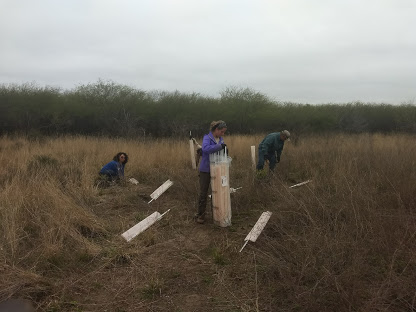
We were removing invasive Buffelgrass, which grows densely and often pushes out native plants, not to mention it’s a fire hazard.

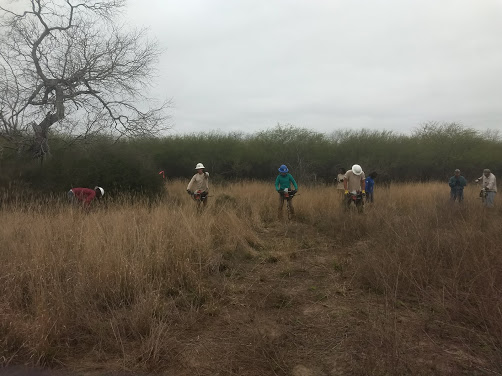
I removed Buffelgrass on a hitch in October with herbicide, but this time we were hand-removing with picks.

After removing each bush of Buffelgrass, we’d fold it in half and then put a rock on top to hold it down.

Here’s a before and after of one of the patches we worked on:

Buffelgrass: Before
Buffelgrass: After

Being so close to the Arizona/Mexico border, Border Patrol had a heavy presence and there were signs about drug smugglers and illegal immigrants.

We had an hour and a half hike out to our work site each day, and we’d always pass a few traces of human life—like black water jugs (which don’t reflect light) and some old items of clothing.

water bottle

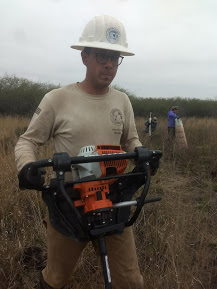
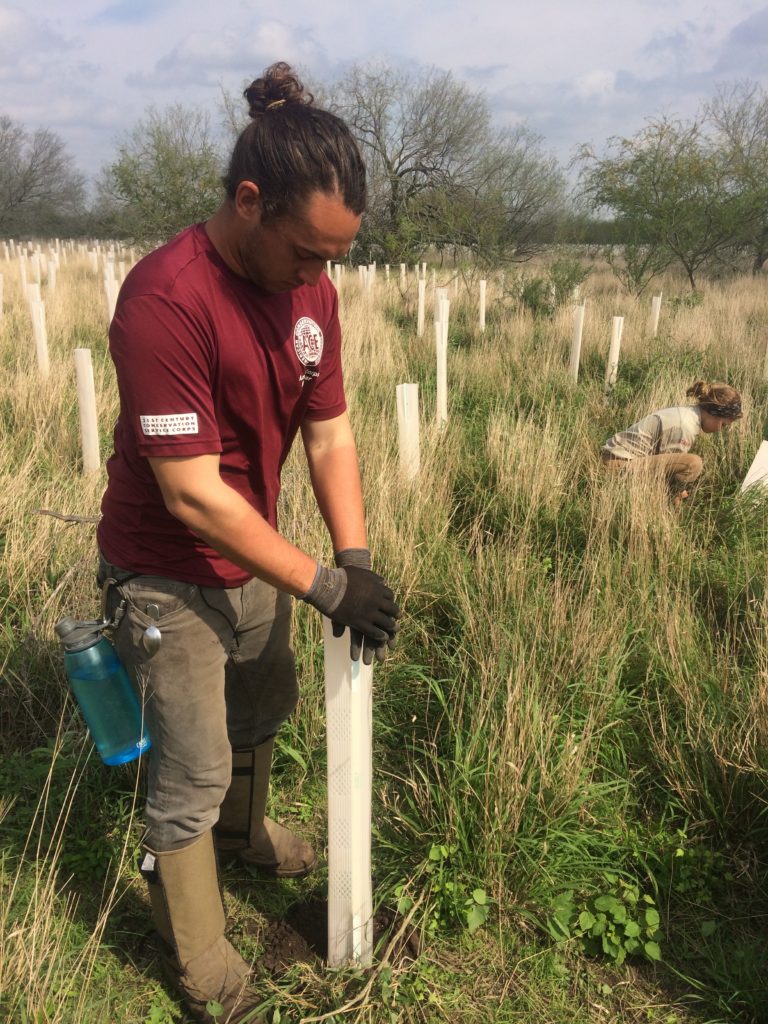
We got to wear ACE sun hats under our hard hats while working out in the sun.

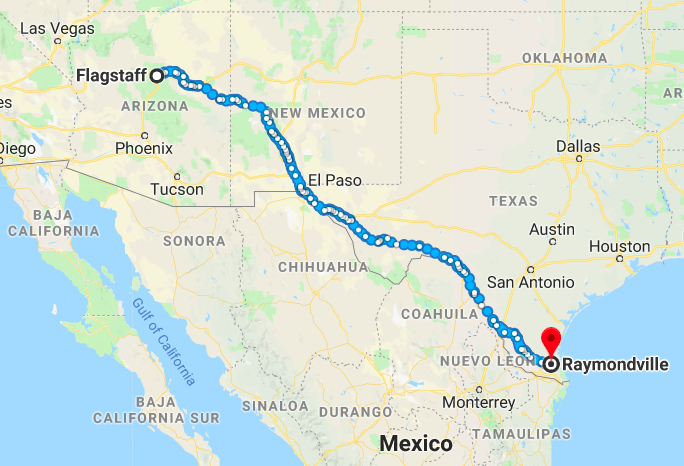
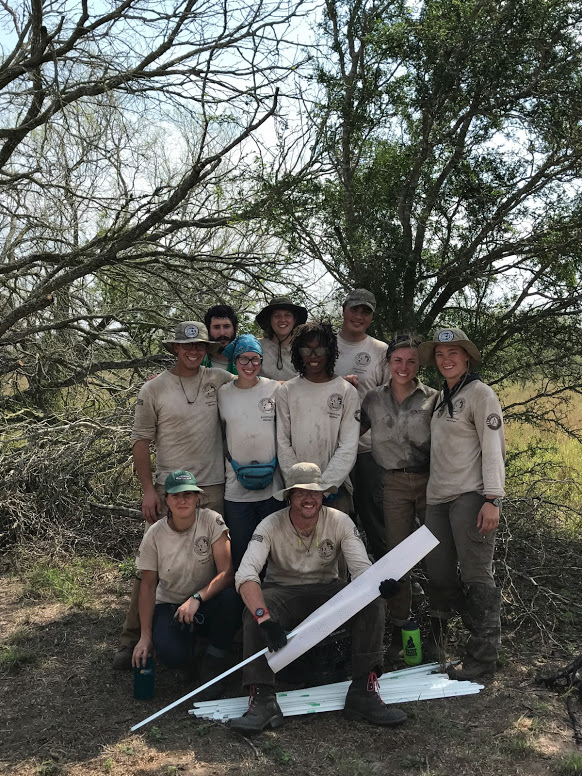
The weather was fantastic all week, and we had an excellent crew. Tomorrow I’m headed to Texas for a monthlong hitch. Happy trails!

Resolutions Checkpoint 2018: January

For the past several years, I check in at the end of each month to see how I’m coming with my resolutions and to pinpoint some specifics I can work on in the following month. It doesn’t take that much time, but without this simple monthly reflection these resolutions would certainly stray from my focus.

Here are my resolutions for the year, which are always prone to change and develop with time.

January Progress

Zero-waste Lifestyle

I meant to write a post this month about where I’m at now with my waste production, so that I have my starting point tracked—but haven’t done that yet.

I continued to use my reusable sandwich/snack wraps on hitch, as well as a plastic container for hitch leftovers. Despite being a conservation corps, ACE doesn’t usually recycle on hitch (unless it’s available at our campsite/worksite). But this past hitch, I started a collection of cardboard and other recyclables, which we drove back to the office (in Flagstaff) and recycled at derig. (Yay, small wins!)

Yoga/Pilates/Hamstring Stretching

I set up my new bullet journal on the 14th of January, and had five checkmarks in my “Yoga” column from the 14th to the 23rd. Although I didn’t track yoga on hitch, this was the first time I actually did some stretching/yoga on hitch (maybe three days?). While I didn’t have time every evening, it felt good when I did make room for it.

The Tuesday before hitch I had three different phone interviews for a farm internship (which I’ve since turned down, FYI) and was feeling really anxious about all of it. I was trying to read a book but couldn’t concentrate at all, I was so stressed/anxious. But in that moment, I decided to do some yoga. I turned on a video and cleared my mind through the breathing and moving. In the past it wasn’t habitual for me to turn to yoga immediately in stressful situations, so I’m proud/grateful that it was my response last week.

Art Journal Regularly

This is where I’ve done the best this past month. As you saw in my last post, I started a new day-marker art journal in January and hadn’t missed a day until this past hitch. I brought it along on hitch and made some collages the first few days, but there were a few evenings where there just wasn’t time to pull it out (usually on cooking/washing nights).

This is totally fine with me, as I don’t want to stress myself out with this, but rather enjoy the time creating in there. So as long as I get back into the swing of art journaling on off days and keep bringing it on hitch, that’ll be excellent.

I checked out a couple of books from the library this month which have helped spark ideas, as well (one on collage, another on hand lettering, another on creative ideas, etc).

Create One Bigger “Thing” Quarterly

On January 15 I started work on my IBS story by pasting old blog posts and emails into a huge Google Doc. Then during my first three days back in Flagstaff I came to the library twice and worked on it. After that, I was gone on hitch for eight days and I just got back yesterday afternoon.

I’m typing this very post from the library, so I’m getting into a routine of coming to the library multiple times during my six off-days in Flagstaff. However, I may need to lower my expectations on this one while on my ACE schedule, as I’m gone on hitch over half of each month.

Bits and Pieces

There’s just one bit from here that I want to touch on in this check-in:

  • Write in poetry notebooks weekly — I haven’t been back in my poetry notebook since this post, though I did bring it along with me on hitch. I think I need to change my resolution from publishing a poetry collection to filling x notebooks with poetry exercises.


February Focus

So, all of that said, here are some concrete things I can do next month to work towards these resolutions.

Zero-waste Lifestyle

Yoga/Pilates/Hamstring Stretching

  • Track in bullet journal. (And bring bullet journal on hitch if I’m front country.)
  • Do yoga at home at least four of my six off-days.
  • On hitch, do just 5 minutes of stretching after the work day. Do it from inside my tent if it’s cold.

Art Journal Regularly

  • Track in bullet journal.
  • I’ll aim for creating a day-marker page 20/30 days this month.
  • Read two more chapters of the art journaling PDF I bought last month.

Create One Bigger “Thing” Quarterly

  • Go to the library at least twice per set of off-days.
  • Write for at least 30 minutes each session.

Bits and Pieces: Poetry

  • Carry poetry notebook and pen with me.
  • Do at least two exercises per week.
  • Track in bullet journal.

These are the directions I’m heading towards in February. You’re welcome to use this space for your own monthly reflection, as well.

What went well in January? What direction would you like to move towards in February?

A Look Inside My Day-Marker Art Journal

Last year Candace Rose Rardon shared three simple ways to keep an art journal, and later followed up with three more simple ways to keep an art journal. I love the tips shared in those posts! And they truly are simple and accessible—the most “advanced” tools you’d need are a glue stick and perhaps a pair of scissors.

One day this summer my mom gave me a set of notebooks, one of which had blank pages. Immediately I knew I’d use it as a little “day markers” journal, à la Candace Rose Rardon. A day marker is something from your day—perhaps a receipt, business card, envelope, ticket stub, scrap of paper, etc.—to mark that day, so it doesn’t just blend in with all the rest.

I’d simply glue the item down with a glue stick, and then write the date and any other details/notes I wanted to jot down.

Here are some pages from that journal:

When I moved to Flagstaff in September, I brought along this journal as well as a glue stick, pen, and small scissors. I kept these supplies all together in a zippered pouch, which I’d pull out at least once per set of off days to record some days. (The pages for this chunk of time in Flagstaff were heavily receipts-based, so it was a fun creative exercise to keep my eyes on the lookout for non-receipt ways to remember a day.)

It’s so fun to page through and relive those days! And this journal was a lot easier for me to crack open than my writing journal—there was never resistance.

That’s what has been so lovely about the practice, I think: how quickly you can start and finish a page (under five minutes). And secondly, it’s been helpful knowing that this journal is just for me and my personal records, so early on I gave myself permission to not make it look good. (Although I’m sharing pages today, this was never my intention when I began and worked in the journal.)

This journal is now falling apart (and bursting open wider than it was ever meant to), so I got a new sketchbook over the holidays (with spiral rings!). It sat untouched for over a week on my desk, until I finally decided I could use this bigger notebook in the same way: for “day marker” pages.

I’ve played in my new sketchbook for 11 days in a row so far! My initial goal is 30 days straight, though if that melds into a 100-Day Project, I certainly wouldn’t be opposed.

The right side of January 5 (above) was a sketch for #MomentSketchers, while the left side was another quick gluing of a receipt and shopping list, like in my first journal.

For a few days I’ve been drawing out what I did, or notable happenings.

When I made my collage envelopes for Jean Wilson’s Envelope Exchange, I used the same materials to remember the occasion with a mini-collage on the day’s page (above).

I glued an envelope onto one of my latest pages. Inside I put the note and check I’d received in the mail for my first watercolor commission, as well as a print-out of the dog I’d drawn over with pencil with my Great Aunt Lois when working on said painting. I cut apart the yellow envelope and glued parts of it onto the page.

I’m really enjoying this type of daily journaling. It’s creative, easy, and fun, and looking at old pages takes me back to those moments in time.

Do you keep any sort of art journal? What does your practice look like? 

Or, if you’ve never had an art journal before, does this look like something you want to try?

Just Move the Pen

I wrote that I’d like to publish a collection of poetry this year, so of course I need to start writing poetry regularly in order to make that happen.

I wrote two poems this fall, and haven’t moved the pen in that direction since. So one day last week I searched for poetry-writing exercises/prompts and saved a bunch of links to a folder on my bookmarks bar. This way, I wouldn’t have that hurdle the next time I’d try to write.

Finally, the other day I acted on my “10 minutes of writing poetry” to-do list item. Sitting down with the intention to write a poem will likely leave you frozen, so I sat down with the intention to do one of the prompts, that’s it. To get myself in the habit of regularly writing freely in this little notebook (from an issue of Flow), which I’ve dubbed my poetry notebook. To condition myself to be okay with writing shit on the page, so that better stuff can come later.

Although I never intended to show these pages with anyone, today I’m going to share what happened that day—as a reminder to myself of how ideas are born and why sitting to write anything for 10 minutes, no matter how “bad” it sounds, can be helpful to one’s creativity.

I went to the first link I had bookmarked and read the first prompt that appeared. Jennifer LoveGrove writes:

One that I’ve used from The Crafty Poet is where you choose a profession or worker of some kind – plumber, accountant, hairdresser, contractor, lawyer, whatever – then brainstorm a list of words associated with this job. I find nouns and verbs work best. The prompt suggests adding in some contrasting terms, which will add tension and depth later. Your title or starting point is to be “The ________________ said you need” and then you write from there, using your word list. My poem “The Mortgage Broker Asks for My Net Income from the Previous Year” in my recent book came out of this exercise.

I chose “teacher” and began to make a list of nouns, verbs, and some contrasting terms, writing whatever came to mind first:

Then on the left-hand page I wrote:

The teacher said you need to study
But I know you must also play

I continued on a new line:

Playing will teach you to share

But then I was bombarded with a bunch of other thoughts about sharing, that you’ll create and entertain yourself, too, plus all the other benefits of play. I noticed there was no rhyme scheme going on here, and I didn’t know what I wanted to say. But instead of halting and trying to write some “good” lines, I let my stream of consciousness continue:

and create and entertain yourself.
You’ll visit worlds never before seen
and

After writing “and,” my mind focused on “never before seen,” and flashed (you’ll see I never even finished the phrase) to the idea of a never-before-seen movie, a premiere. Almost instantaneously, my mind brought up the contrasting idea of painting a never-before-seen picture.

And then as if a water hydrant had cracked open, all of a sudden my pen began to spurt out a list of contrasting things to do, x or y, consume or create: scroll through memes or invent your own using a template, or even creating your own meme. To stare wistfully at a friend’s photo album from a trip to Costa Rica, or take a walk and marvel at nature’s beauties: a squirrel, a bird, a stone, a leaf.

After I had jotted those down, I turned to a fresh page and wrote this list:

Just like that, I now had the idea to write a poem that compares and contrasts different options of things to do—one which is an act of consumption and the other of creation. Its ideas of creation would hopefully inspire and prompt people to use their creativity immediately after reading.

Later I’ll go back to this list and start to make phrases, seeing what sort of structure the poem might take on.

But what’s important here is that it all began with an unrelated prompt about teaching, and allowing the pen to move. By not censoring myself and letting my pen write whatever words were coming to mind, I ended up drawing connections and now I have several ideas of possible poems to pursue!

I started with nothing, and in less than ten minutes I had ideas.

This is how it begins!

Just move the pen. This is how ideas are born.

Write anything and connections will be made, the mind will turn the soil, and with consistent practice shining down, over time, creations will bloom.

Just move the pen.