Resolutions Checkpoint 2018: February

Some people avoid the word “resolutions,” but I continue to make them each year because of these lovely monthly check-ins. This simple monthly post turns my attention back towards new directions and provides the space for me to briefly reflect. That said, I’m diving right in!


February Progress

Here’s the progress I made on the focus items I gave myself at the start of February.

Zero-Waste Lifestyle

Here’s some additional progress I made in this category over the month:

  • Read four blog posts on the Be Zero blog.
  • Emailed my place of work with ways we can reduce waste as an organization.
  • Used my tupperware/hitch dishes for breakfast at all of our motel/hotel stays (which only offered single-use utensils/dishes) and encouraged crew members to do the same.

Yoga/Pilates/Hamstring Stretching

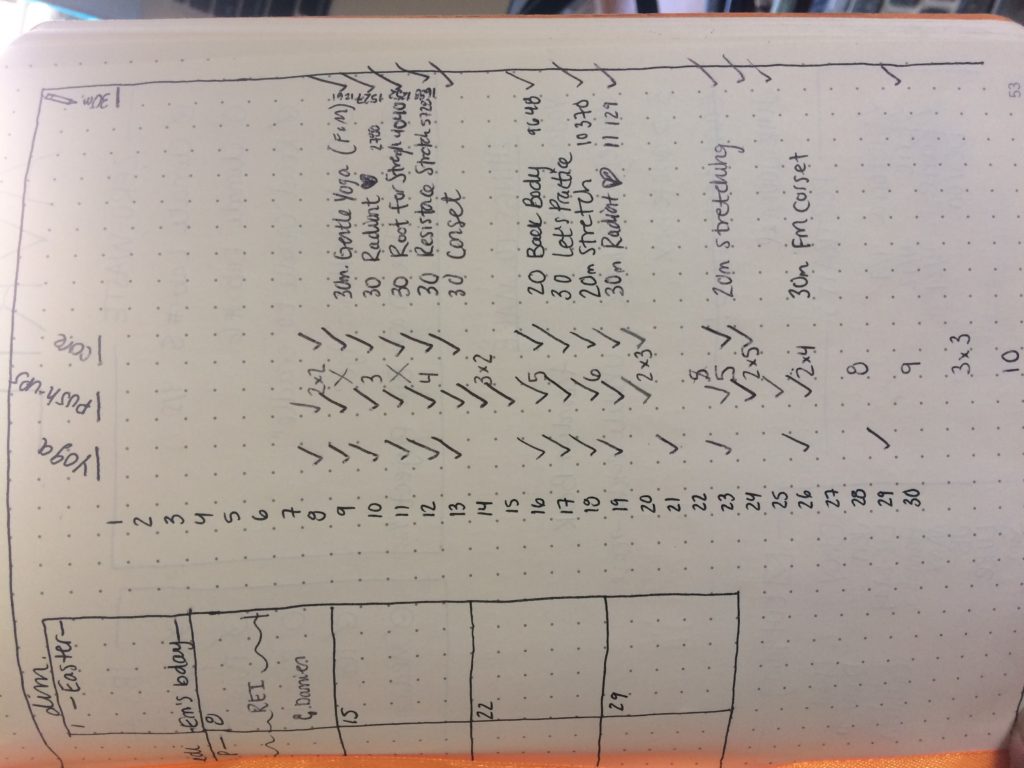
  • ( ) Track in bullet journal. (And bring bullet journal on hitch if I’m front country.) — I stopped using my monthly tracker after the 18th, and only had three yoga checks in that period.
  • (-) Do yoga at home at least four of my six off-days. — Being put on a monthlong, I wasn’t on an 8/6 work schedule after all. Due to our location on off days (bunkhouse without Wi-Fi) and the logistics surrounding all of that, I didn’t do any yoga on my off days this month.
  • (-) On hitch, do just 5 minutes of stretching after the work day. Do it from inside my tent if it’s cold. — Again, the schedule/logistics, our locations (i.e. grimy motel), and my various health ailments all led to this endeavor being completely dropped from my awareness. I did some stretching one work night from our motel bed, but that’s it while on hitch.

Art Journal Regularly

  • (+) Track in bullet journal. — I tracked it in my bullet journal through the 18th, where everything left off, but kept on making pages nearly every day.
  • (+) I’ll aim for creating a day-marker page 20/30 days this month. — I’ll have to count pages for an exact number once I’m back home (currently I’m at the library), but I know I have more than 20 pages for February.
  • (-) Read two more chapters of the art journaling PDF I bought last month. — Never did this.

Art journaling in my day-markers notebook has been so fun. Making my daily page is something I continuously look forward to; there’s still no resistance. So I’m going to ride the wave and keep on enjoying that part of my day.

Create One Bigger “Thing” Quarterly

  • ( ) Go to the library at least twice per set of off-days. — While on my monthlong, I worked on this quarterly creation three times. One was a longer formatting session, so I’m surprisingly close to have the bulk of it written. (I’m at 80+ pages at the moment!)
  • (+) Write for at least 30 minutes each session. — Not all of these were writing sessions, as I jumped ahead and started to format the document, but each work session was 30 minutes or more.

Bits and Pieces: Poetry

  • (+) Carry poetry notebook and pen with me.
  • (-) Do at least two exercises per week. — I did one exercise in the van on our drive to Texas, and then nothing for the rest of the month.
  • (+) Track in bullet journal. — I do have a checkmark for that single day!


March Focus

I can tell you right now, the biggest adjustment I’ll be making for March is to remove my focus from yoga/stretching in order to swing the pendulum towards daily poetry reading instead. You can’t do everything all the time, and often focusing on one element for a prolonged period of time is when you’ll get the most growth. (That’s how I learned French back in 2015, for example.)

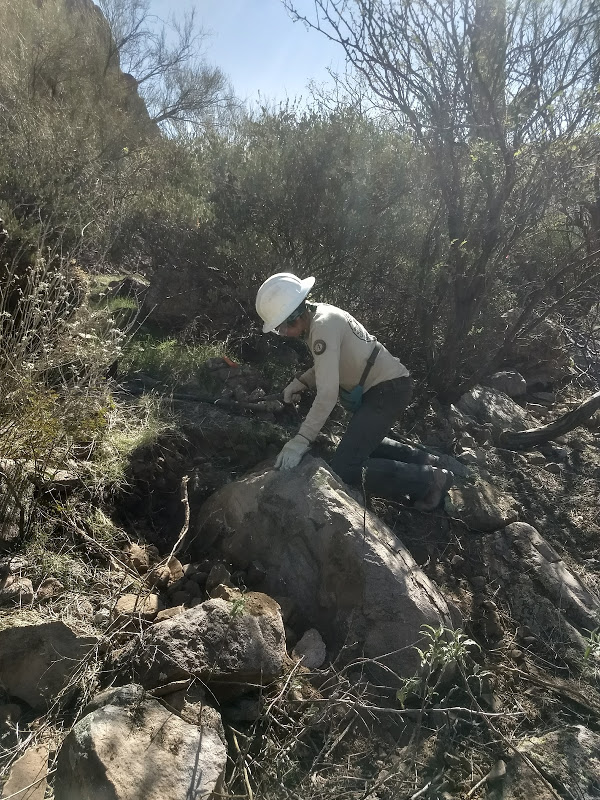
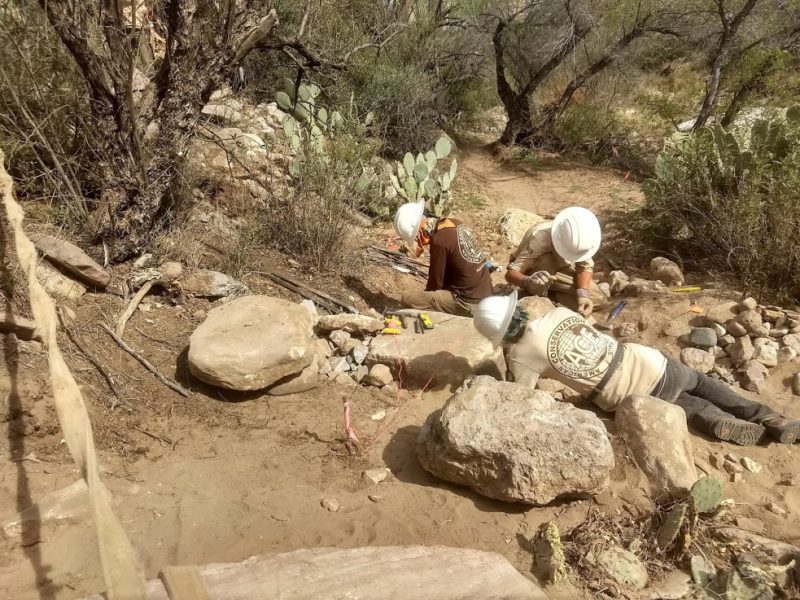
This is my final month on the conservation corps in Arizona, and I kept that in mind while making this tweak. April is wide open, and likely I’ll return to my parents’ home in Wisconsin which means ample space and time for yoga and stretching.

Zero-Waste Lifestyle

Yoga/Pilates/Hamstring Stretching

I did set up a column for this on my March calendar page, but like I explained above, I’m letting this drift from my attention this month.

Art Journal Regularly

  • Create a day-marker page for 20+ days of the month.
  • Read two more chapters of the art journaling PDF I have.

Create One Bigger “Thing” Quarterly

  • Write the PDF’s conclusion
  • Write the PDF’s introduction

Bits and Pieces: Poetry

  • Read a poem per day (track in bullet journal).

I realized after January that I needed to change my target from publishing a poetry collection this year (lofty goal; feels unapproachable) to simply filling x notebooks with poetry exercises/wordplay. Despite this change, there was still enough resistance last month to the exercises that I want to scale it back and simply be reading poetry every day in March.

I bought the poetry books “salt.” and “the sun and her flowers” as a gift to myself a few days ago, plus I checked out several books of poetry from the library. This is something I’ll easily be able to do even while on hitch, which makes it reachable.

My hope is that by turning my attention towards poetry at least once a day, my subconscious may start to think in poetry without so much force. To my delight, on my walk to the library today I pondered a topic and then my mind automatically worded it into a brief, two-line poem—in the style of many of Nayyirah Waheed’s poems. So I jotted it down in my poetry notebook upon arriving at the library. Hooray for small successes!


So that’s where my attention will be this month. What about you? What’s one small thing from February that you’re proud of? Where would you like your attention to be during March?


Interview: Teaching Abroad in Spain + South Korea

Last month I was contacted by Megan Haskin of Korbay Delay to be interviewed for her Teachers Abroad series. Currently teaching in Vietnam, Megan has also lived/taught in Bhutan and Costa Rica.

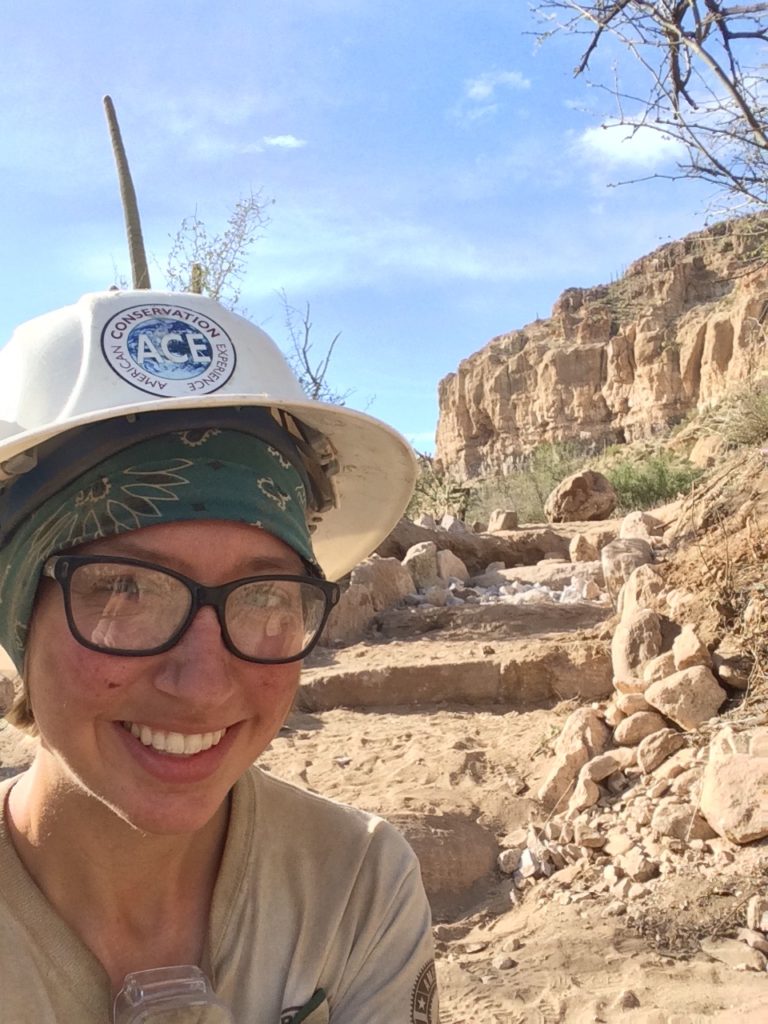
It was interesting to reflect on these life experiences which happened between seven and four years ago (teaching in Madrid and teaching in South Korea, respectively). While looking back, I found myself staring at a canyon-wide gap of distance between the 22-year-old me in Madrid, the 24-year-old me in South Korea, and the current almost-29-year-old me writing today from Texas where I’m on hitch with ACE’s conservation corps.

This distance is more than the years, more than the miles.

I’ve shed and grown several layers since my days teaching abroad; I’ve turned the page not just to a new chapter, but to a new book. Might I teach English abroad again in the future? It’s an option. But that would be with my new identity, which is based strongly on living my values in everyday moments as a human being. The creation of this very site last fall has played a much larger part in adopting this new identity than I realized at the time.

Every day we change, though often it’ll be years before we look back and find ourselves staring at a stranger with our eyes, but whose mind we can no longer enter.

Update 2019: The interview is no longer live, so I’m going to post Megan’s questions and my answers here, below.

Teaching Abroad Interview

1. Tell us a bit about yourself – who you are, where you’re from, your teaching experience and where you previously taught.
I grew up in Wisconsin and have lived in a variety of places since college, my most recent home base being Flagstaff, Arizona, where I’m serving on ACE’s conservation corps via AmeriCorps. I’m currently in the fifth month of my six-month term and don’t yet know where I’ll live/work next, but I’m continually guided by my values (growth mindset, kindness, creativity, mindfulness, gratitude) and my personal compass.

It’s been about a year and a half since I first got into watercolors and travel sketching, which I do alongside hobbies of art journaling, blogging, reading, snail mailing, solo slow traveling, and wander walking. I first taught English abroad in Spain (2011-12) and then again in South Korea (2013-14). I’ve lived in France as well (2015-16) and have taught English to adults in my hometown as a volunteer at a local non-profit.

2. How is it that you ended up teaching in these countries?
I studied abroad in Madrid my junior year of college and loved it. I actually chose the year-long program in Madrid for financial reasons, as tuition was about the same as a year in Madison, but luckily during the year Madrid grew to feel like a second home.

While staying at a hostel in Valencia one weekend, I met some people who had studied abroad in my same program just a few years earlier, and who were at that time teaching English through Spain’s auxiliaries program (North American Language and Culture Assistants). I tucked that nugget of information away and applied on a whim the following year, two months before graduating from UW-Madison. I was moving forward with a Peace Corps nomination when I received an email that summer saying I’d been accepted to teach in Spain. I had three days to accept or deny the offer, and ultimately I chose to go back to Spain.

While there, I discovered a few blogs of people from my university who were teaching English in Korea and read them regularly. That possibility entered my radar, but far away at the periphery. After that second year in Spain I returned to Wisconsin and worked for a year to pay back my student loans at a faster pace. That spring I applied to teach English in South Korea through GEPIK, and I moved there in the fall of 2013 to teach at an elementary school.

3. What do you love most about teaching and living there?
In Spain I love the sun, vibrant culture, friendly people, beautiful language, relaxed lifestyle, affordable wine, and rich history. As an atheist who had to hide my lack of belief for much of middle and high school, I like that Spanish people are more open about certain topics, religion being one of them. I like the proximity to Western Europe and the idea of working to live—rather than living to work. In 2014 I walked the Camino de Santiago across Spain, and every subsequent visit to Madrid feels like a homecoming. I also like that there are such distinct areas in the country—so much so that after two years living in Madrid and traveling around the country, I still have places I’ve yet to visit.

In South Korea I most loved the delicious food, my adorable students, and the fantastic mountain views in all directions. Although it was a very challenging year for me, I enjoyed learning about a culture I’d been completely unfamiliar with before arriving. I also got to experience learning to read at age 24 when I learned to read Hangul, which was quite humbling.

Korea 2014- With my Co-teachers

4. What is the most challenging aspect of teaching in this part of the world?
In the program I taught through in Spain, it was challenging because I felt underused and powerless to change the outdated teaching methods at my particular schools. I taught at two vocational colleges where my upper-teen/adult students were required to take one or two years of English, but weren’t necessarily personally motivated. One of my co-teachers couldn’t hold a conversation in English and would give out irrelevant, boring translation exercises as classwork and homework. To keep myself sane, however, I taught several private lessons in the evenings and they were fulfilling for me. I could see my students’ progress and had total control over designing and teaching each lesson. I also played on Madrid’s ultimate frisbee team Quijotes+Dulcineas during the year, which gifted me with friends, travel, and fun.

In South Korea the most challenging aspects for me were the language barrier (and subsequent isolation) and cultural beliefs that differed from my own (i.e. collectivism, the social hierarchy, family pressures, demanding schooling, high presence of plastic surgery). I’ve written in more detail about what I will and won’t miss from South Korea in this post.

Teaching in South Korea

5. What advice would you give to someone wanting to teach in these places?
If you want to teach in Spain, keep a hefty dose of patience in your front pocket at all times. Patience will be required for any bureaucratic business, but living in Spain is so worth those hassles. I have a collection of practical resources and how-to posts about teaching/living in Spain here.

If you want to teach in South Korea, I would check out the EPIK and GEPIK programs, though teaching in a private Hogwan is definitely an option as well. Here is where I have a huge batch of information about teaching English in South Korea.

6. What would you tell someone who is considering teaching and living abroad?
Go for it! Even in my most challenging year abroad, I learned and grew so much—I wouldn’t trade it for anything. My years teaching and living abroad have had such a profound impact on who I am today, and they continue to shape my life.

If you have any questions or need some encouragement, email me! I love encouraging others and providing information that makes living abroad more accessible.

And here’s where you can read more:

  • Spain blog: Oh No She Madridn’t
  • Korea blog: Rebe With a Clause (This blog spans ages 23-28—including a year in France—so it’s not a “Korea blog,” but that’s where you can read extensively about my year there.)

pexels-photo-271168

Real Talk About Money

I’m a huge fan and supporter of the podcast Real Talk Radio with Nicole AntoinetteOne question she has asked past seasons’ guests in her rapid-fire questions section is “What is one thing you wish people would be more honest about?”

And can you guess what the most common answer is?

Money.

A month ago in the podcast’s Patreon community, Nicole started a thread about this topic. Most everyone expressed an interest in learning the behind-the-scenes about people’s incomes and financial situations—especially for those on a more unconventional path. So as someone without a “career” who has lived abroad several years (Spain, South Korea, and France), I’ve decided to add my voice to this discussion and pull back the curtain on my personal finances.

Real Talk About Money

University: 2007-2011

My dad helped with one of my first housing or tuition payments my freshman year, I think it was around 1K, but from then on I covered everything myself via student loans and working. I had an office job throughout college, where I’d work 10-15 hours a week during the semester, and full-time over Christmas, Spring and Summer breaks.

At some point in here I bought an old car (’89 Honda Accord) from my neighbor for $500. The summer of my sophomore year I got an additional weekend job at the hostel, so I’d work there Friday nights and Sunday mornings, picking up an additional Saturday shift here and there.

My junior year of college I studied abroad in Madrid. I knew I wanted to study abroad somewhere that spoke Spanish, and ultimately chose the Madrid year-long program because its tuition was about on par with a year at UW-Madison (~$7K). I applied for and received a $1,000 scholarship from the study abroad alumni foundation and taught private English lessons each week while living in Madrid, bringing in 65-80 euros/week. My rent was 320 euros/month.

By the time I graduated from college in 2011 I had ~23K in student loans.

Teaching English in Spain: 2011-12

I worked full time the summer after graduation, until I left for Spain. I’d accepted a position teaching English in Madrid, through Spain’s North American Language and Culture Assistants program. I received 1,000 euros/month for nine months (October – June). My rent was 240 euros/month. You can see all the financial details of my second year in Madrid here.

I paid on all of my school loans as soon as the grace period was up, overpaying each month. By the end of my time in Spain (September ’12) I still had over 1K euros in my Spanish bank account, which I left there. I’m pretty sure this was the year abroad during which my dad sold my car to someone for scraps.

Working in Madison: 2012-13

I returned to Madison and was able to work in the same office where I’d worked all through college, this time as an LTE. I made $16/hr before taxes, the most I’ve ever been paid to date. During the tax season I got a second (weekend) job at H&R Block ($12/hr). I would leave my university office job a little early on Fridays to work at H&R Block Friday night, all day Saturday, and all day Sunday.

My rent this year was around $420/month (I shared a flat with two housemates). I put all my extra money towards my loans and finished paying off two of them in 2013. To date, this is the most money I’ve ever made in a year (~35K), and that was at age 23.

Teaching English in South Korea: 2013-14

I left my office job in the fall of 2013 to teach English in South Korea. The school paid for my airfare (to/from) and my rent during the year. I made around $2,000/month, which included some compensation for the extra after school classes I taught as well (requested of me by the school).

I finished paying all of my student loans before the end of 2013, which felt quite freeing. I also opened a Roth IRA that year and contributed the maximum amount ($5500).

Working as a Virtual Editor: 2014-16

In spring of 2014 while still teaching in Korea I started writing blog posts for a language-learning startup. I made $65/post and wrote just a handful of them. Then I was asked to come on board as an editor for the startup—$13/hour. I started working a few hours after school each day, coming out to maybe 10 hours/week. When my contract ended in Korea that fall, I visited Spain and spent a month walking the Camino de Santiago, using the money I’d left in my Spanish bank account two years earlier to fund the journey.

When I returned to the states in the fall, I was able to bump up my editing hours full time. It was the same flat hourly rate without any health benefits, so I got health insurance through Obamacare (my contribution was ~$80/month) and maxed out my Roth IRA contribution again that year. I was living with my parents rent-free.

Moving to France: 2015-16

For the previous five years I’d been dabbling in French, and when 2015 came around I decided that was the year I was going to really learn it. Using money earned in Korea, I booked myself six weeks at a private French school in Montpellier, France. I rented an AirBnb for two months at $500/month and was able to reduce my work hours to 20/week (for maximum French time). I asked for a raise during this time and my hourly wage went up a dollar. I started dating Damien (a French guy) near the end of my time there, and we decided I should try for a year-long visa to live in France.

I returned to Wisconsin in July and began applying for the year-long tourist visa. (<<The breakdown of what the visa cost is in the previous link, but the total comes out to ~$1,200.) Basically I had to prove that I would have enough money to sustain myself, which my virtual job made possible. I moved to France in October of 2015.

I continued working from home full-time for the language-learning startup. Since I split rent with Damien, my half was about 150 euros/month. My phone service was actually free, as it came with a deal through our internet. I broke up with him in March and found a place to live in Montpellier for 300 euros/month, staying until my visa expired at the end of September. Per my usual, since I live without a car (and many other things), my main expense after rent was simply groceries.

Personal Sabbatical (aka Intentional Unemployment): 2017

It was that summer (2016) that I decided to leave my job. After 2.5 years working virtually, I was ready to spend more time away from the screen, interacting with people and the outdoors face-to-face, and to pursue other interests. I stopped working full-time in September, but worked minimal hours (10/week) through December 2016 until I left for good. I was living at my parents’ home when I came back from France, again rent-free. When I received my final paycheck in December I had around $16,700 in my savings account.

My flight home from France (I actually flew from Madrid to Chicago) had been cheaper to buy round trip (600 euros), so I had a return flight (Chicago to Madrid) booked for January 2017. I took the flight and a backpack and spent three months slow traveling Italy, returning to Madrid/Montpellier, and visiting a friend in Munich. I stayed at hostels, did a work exchange, and stayed with friends for the duration.

When I returned to the states in April I lived with my parents again. I got a U.S. phone number and a month-to-month plan for $30/month with Cricket. I started a garden in the backyard, participated in a local art project, and read lots of books from the library. Again, my only expense was food, as I had no rent or car expenses. My mom is amazing and let me use her car if I needed to get anywhere in the evenings, so from time to time I’d fill up the tank—but I honestly wasn’t driving much.

I volunteered as a camp counselor in July (took the bus to Minnesota) and visited my younger brother for a week, taking the bus back). I was on the state health plan (Badgercare) during this time of unemployment.

Then in August I applied for an AmeriCorps position with American Conservation Experience (ACE) in Flagstaff, Arizona—where I’ve been based since the end of August. At the bottom of this post is a breakdown of how much I spent to get there (~$700). ACE provides group housing (I live with 16 people in a 4-bedroom apartment), food on work days (hitch), and a biweekly stipend of $512 before taxes (it’s around $470 after taxes).

I’ve been on food stamps in Arizona since arriving, receiving $190/month for groceries. It’s more than enough and for the first time in my life I shop at Whole Foods, as it’s the closest grocery store to me. Twenty-seventeen was the first year since opening my Roth IRA that I did not contribute, since I hardly made anything. By the end of the year I had around $14,500 in my savings account—so I only went down about 2K overall during those twelve months of personal sabbatical.

Currently: February 2018

I’ll turn 29 in April and here’s where I stand: I have no debt, my Roth IRA has around 20K, my savings account has been hovering around $14K over these past couple of months, and I have a couple hundred dollars in two different checking accounts (Charles Schwab Investor Checking—no foreign transaction fees and Capital One 360). I have a Capital One Venture credit card where I make nearly all purchases (no foreign transaction fees), and which I treat like a debit card.

My AmeriCorps term is coming to an end next month and I don’t have any idea what I’ll do next. (I’m not worried; this is normal for me.) But based on my lifestyle and the opportunities I know exist (i.e. HelpX—volunteer in exchange for food and accommodation, WWOOFing—work on organic farms in exchange for food and accommodation, Couchsurfing—free lodging for travelers with open-minded community members, AmeriCorps, volunteering to live at intentional communities like Ratna Ling, seasonal work via CoolWorks, etc.), the money I currently have in the bank can last me a looong time. My food stamps are scheduled to last until August, unless my income rises above $1010/month.

I know my money perspective is quite skewed (and that it will likely change with time), but to me at this point in my life, anything over $50K seems like a huuuge amount of money to make in a year. If I were to ever make 40K a year, for example, that also seems like so much.

Everyone has situations that give them an advantage in some way. In my case, I have parents who live in a house which they’re happy to share with me rent-free when I’m in the country. I had the privilege to choose not to own a vehicle, which definitely limits what I can do in certain ways, but also allows me more freedom in other ways. I also had the privilege to choose to not buy a house or to not go in debt after paying off my student loans. (Among many other privileges I was born with, a white American raised by my parents…)

I take my time to search for the lowest rent possible (with roommates) when moving somewhere new and have also been willing to live with my parents in a town of 12,000 people for different periods of time in my upper 20s. I prefer experiences over things, and always shop secondhand when I want new clothes. I’m still single and don’t have any kids yet. My unconventional life has evolved such that I spend my time doing things I enjoy; it doesn’t feel like I’m living with monetary restraints. This lifestyle feels most natural and joyful to me, which I know is definitely not the case for everyone (nor even for a majority of others).

All right, that all said, what questions do you have about my money? Did anything surprise you? Want to know more about a certain topic?

u-conserve sandwich wrap

Zero-Waste Lifestyle: The Beginning

As you’ve read in my 2018 resolutions, this year I want to put more of my attention towards the zero-waste lifestyle. This means learning about ways to reduce the amount of waste I produce and making gradual changes as I’m able.

To document this journey, I’m taking a snapshot of what my practices look like today. (I also have a Zero-Waste Bit-by-Bit page with a more detailed record.)


My Current Zero-Waste Practices

Reusable Shopping Bags

I’ve been using cloth/reusable grocery shopping bags since I first moved to Madrid in 2009. There, you had to pay a few cents for each plastic bag you used—all the more incentive to simply buy and use the durable reusable bags that were available in every grocery store. I quickly got in the habit of bringing my own bags when grocery shopping, and this has continued everywhere I’ve lived since.

When making smaller purchases without a bag on hand, I simply tell the cashier “I don’t need a bag” when I check out, and carry them in my arms.

Reusable Produce Bags

life without plastic produce bag

This fall I bought some reusable produce bags from Whole Foods after moving to Flagstaff, to use instead of those thin plastic bags. When I told my mom about it, she bought these organic cotton bags for herself—and they were excellent to use when I was home over the holidays.

Tupperware at Restaurants

My parents go out to eat on Fridays, so while I was living with them for a greater chunk of last year, that meant I got to come along, too. Together we got in the habit of bringing tupperware along for our leftovers, so we weren’t taking any single-use styrofoam take-away containers. Sometimes we would still forget, but what worked best was keeping a clean container or two in my mom’s car for this very purpose.

Tupperware/Sandwich Wraps on Hitch

u-conserve sandwich wrap

During these past five months working on the conservation corps, I always bring tupperware and my two reusable food wraps in my lunchbox. I’ll use one wrap for a sandwich and the other for snacks. I use the tupperware when there are leftovers at dinner, saving both on food waste and ziplock bags. (Our corps sends along ziplock bags with each crew, which mainly get used for lunches and leftovers. I try to avoid using any, but usually use one for the whole hitch, for salty snacks.)

Washing/Reusing Ziplocks

I’m trying to remember who I first saw washing ziplocks—either my grandma or my friend Cathleen—but the idea hadn’t occurred to me before I saw someone else do it. While I eventually want to stop using ziplocks altogether, this is a simple way to reduce my plastic waste production.

Water Bottles

I typically don’t buy plastic disposable water bottles, and currently use my Vapur water bottle and 4L DromLite bag both on hitch and on off days.

Bamboo Toothbrush

This past fall I switched to a bamboo toothbrush (from Mother’s Vault).

Bamboo Silverware Set

bamboo travel utensils

I bought this set of bamboo travel utensils this winter and have been using them a lot! I could have just as easily made my own travel set with metal silverware from home or from St. Vinny’s/Goodwill/Savers, too.

This month I’m in Texas working on a monthlong conservation project, and we’ve been staying in many hotels. The breakfasts at all of them only have single-use styrofoam dishes and single-use plastic silverware. Ah! I’ve been using either my bamboo utensils + tupperware or silverware and dishes from our camping cook set instead.

Recycling

I’m quickly learning that recycling should be thought of as a last-resort rather than the green goodness I was taught it was in elementary school. But if it’s recyclable, my top priority is to get it to recycling rather than a landfill.

That said, we haven’t seen any recycling yet here in Texas! When I asked at our hotel the first night, the woman had to ask me a second time what I was looking for. Recycling? No, we don’t have that here. So my precious little bubble has been popped as I’ve seen more recyclables going to a landfill than ever before. We have a hodgepodge collection of recyclables going in the back of our trailer, but we haven’t been able to save everything. I do have a new curiosity to investigate, though: Why haven’t we been seeing recycling in Texas?

Composting

When I was at home with my parents, I’d save food scraps for our compost bin in the backyard. We’re not allowed to compost at ACE housing, so I try to minimize what food waste ends up in the garbage. (I’m also learning that it’s harmful to the environment for food to end up in a landfill.)

Lunette Cup

lunette cup

I bought this reusable lunette cup in 2016 and haven’t used tampons since. I love it!

Daily Panty Liners

cloth panty liners

I’ve been wearing these cloth panty liners since 2015, as well as a set I bought on Etsy. Although the ones from Amazon are super comfy and work well, I do recall that they were shipped a long distance (from China?) and were packaged in plastic—so this particular set is not necessarily the greenest solution I would recommend today. I have, however, to date prevented three years worth of disposable panty liners from landfills by switching to cloth! (And would never go back!)


Zero-Waste Resources

Here are some of the zero-waste resources I have my eye on.

Books:

Websites/Blogs:

Instagram:


Do you know of any resources I should check out? Zero-waste documentaries? Books? Websites? I’d love any recommendations!